
Post-Surgery Rehabilitation in Soho, Central London
Post-Surgery Rehabilitation at Elevate Clinic, Central London:
Surgery is rarely the end of the journey.
For most people…
It's the beginning of the next stage.
Whether you've had shoulder surgery, a spinal procedure, an ACL reconstruction or another orthopaedic operation, the surgery repairs the tissue.
Rehabilitation teaches your body how to use it again.
That's where we come in.
Our role isn't simply to give you exercises.
It's to guide you safely from healing…
…to movement…
…to strength…
…to confidence…
…and finally back to doing the things that matter most to you.
Let's figure out where you are in your recovery.
Then we'll build a plan that gets you back to doing what you love.
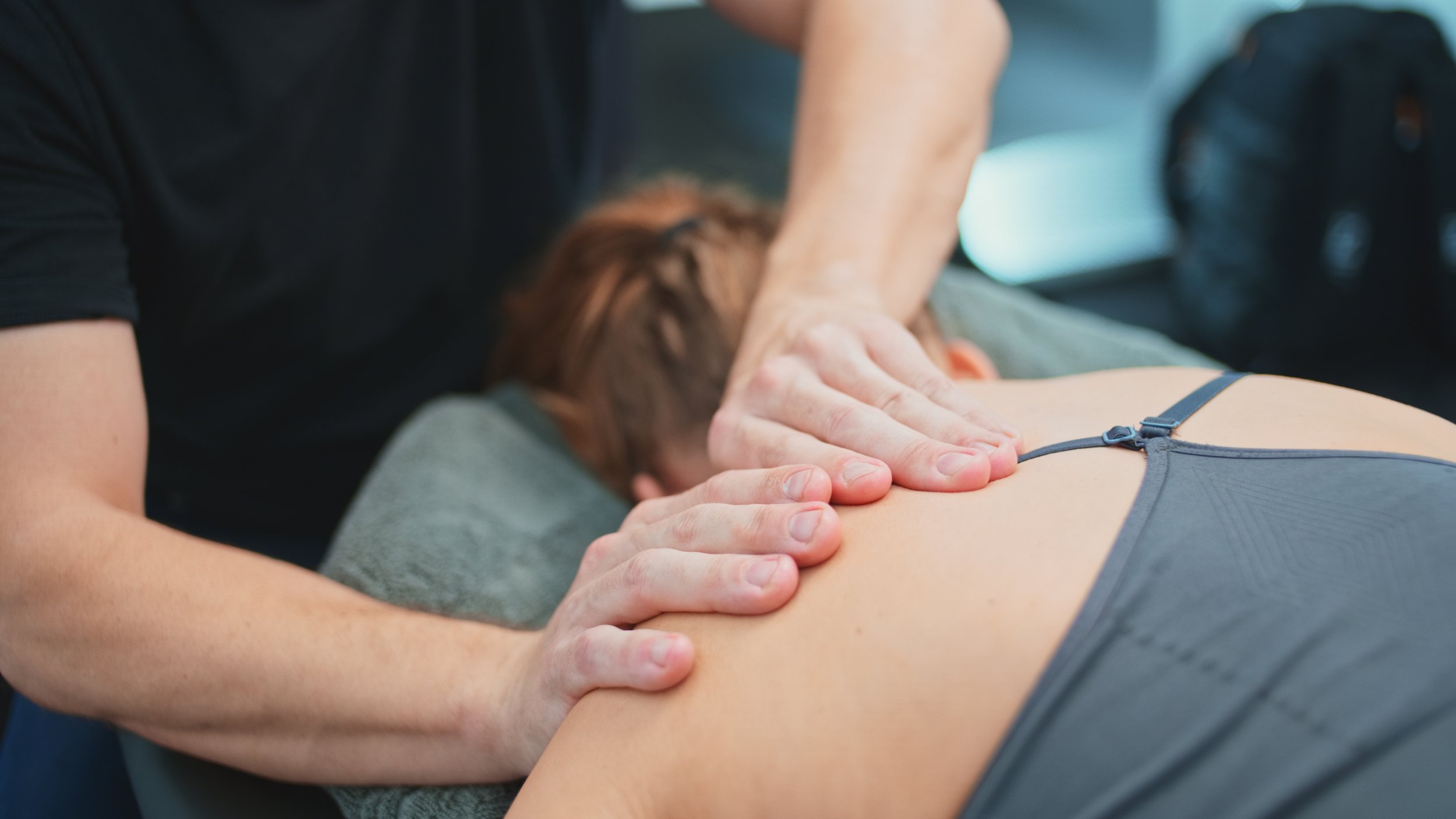
Does this sound familiar?
Many people come to our Soho clinic saying:
"The operation went well, but I don't know what I should be doing now."
"I'm worried about pushing it too hard."
"I'm worried I'm not pushing it enough."
"I've got my movement back, but it still doesn't feel normal."
"I'm back in the gym, but I don't trust it yet."
"My surgeon has discharged me, but I don't feel ready to return to sport."
Those concerns are completely understandable.
Healing and rehabilitation aren't the same thing.
This is a conversation we have almost every week at our Central London clinic.
Patient:
"The surgeon said everything looks great.
But my shoulder still feels weak.
I can move it…
I just don't trust it."
That's actually very common.
Pain often improves before strength.
Strength often returns before confidence.
And confidence often returns before your body is truly ready for the demands of sport or heavy training.
Our job is to bridge that gap.
Every operation follows the same principles.
The rehabilitation programme for an ACL reconstruction looks very different from a rotator cuff repair.
A spinal fusion is different from an ankle ligament reconstruction.
But the principles stay remarkably similar.
First, we respect the biology of healing.
There's no prize for pushing repaired tissue before it's ready.
As healing progresses, we gradually restore movement.
Then strength.
Then endurance.
Then power.
Then confidence.
Finally, we rebuild the specific skills needed for your sport, work or everyday life.
The destination changes.
The philosophy doesn't.
If we're not measuring it, we're guessing.
Rehabilitation shouldn't be based on time alone.
Just because you're twelve weeks after surgery doesn't automatically mean you're ready for the next stage.
Instead, we'll measure the things that matter for your operation.
That may include:
Joint movement
Pain and swelling
Muscle strength
Endurance
Balance and control
Force production
Functional movement
Sport-specific testing
Depending on your rehabilitation, we may use tools such as hand-held dynamometry, force plate testing and functional return-to-sport assessments to understand whether you're genuinely ready to progress.
The calendar tells us how much healing has occurred.
The measurements tell us what your body can actually do.
Because if we're not measuring your progress…
We're guessing.
Rehabilitation changes as you recover.
The first few weeks after surgery are often about protecting healing tissue.
Then gradually introducing movement.
As confidence grows, rehabilitation becomes more active.
Strength training.
Balance work.
Progressive loading.
Eventually, more dynamic exercises.
Jumping.
Landing.
Changing direction.
Returning to lifting.
Returning to running.
Returning to your sport.
Each stage prepares you for the next.
We won't progress simply because enough time has passed.
We'll progress because your body has shown us it's ready.
Recovery is not a straight line.
One of the biggest surprises after surgery is that recovery often feels like two steps forward and one step back.
Swelling may increase after introducing a new exercise.
The shoulder may ache after the first overhead session.
The knee might feel more tired after a longer walk.
That doesn't necessarily mean something has gone wrong.
Often, it's simply your body adapting to a new level of load.
Our job is to help you understand the difference between a normal response and a warning sign.
Sometimes we push forward.
Sometimes we ease back.
The important thing is making those decisions together.
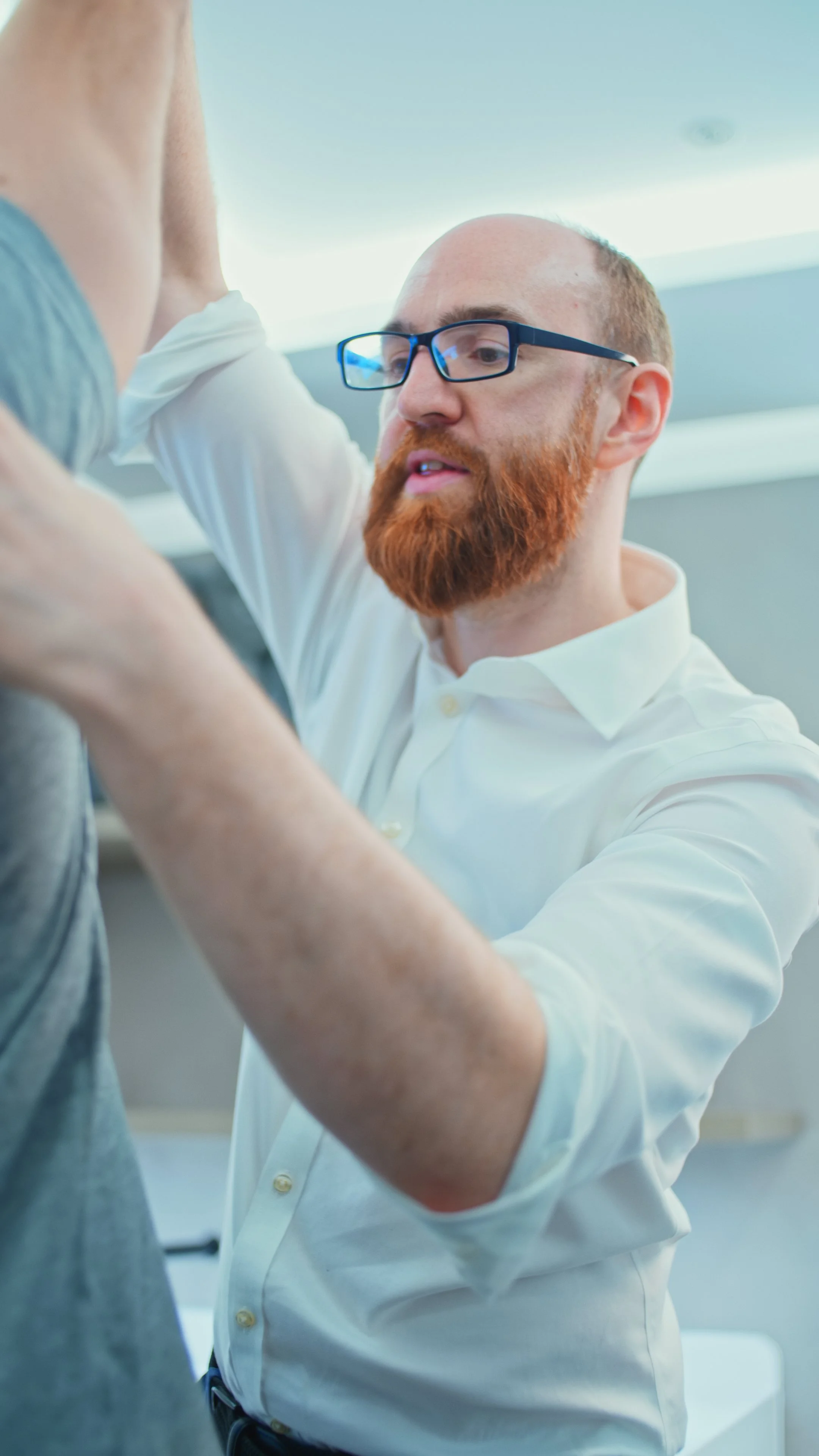
Elevate founder Jon Cairns
What if your recovery is not following the plan?
Every operation has an expected recovery pattern.
If you're progressing as we'd expect, fantastic.
We'll continue building your rehabilitation.
If you're not…
We'll stop.
We'll reassess.
Have we progressed too quickly?
Too slowly?
Has stiffness become the limiting factor?
Is weakness holding you back?
Do we need to speak with your surgeon?
Good rehabilitation isn't about following a rigid protocol.
It's about responding to the individual in front of us.
FAQs
What types of surgery do you commonly rehabilitate?
We regularly help people recover after rotator cuff repairs, labral repairs, shoulder decompressions, ACL reconstructions, spinal surgery, discectomy, ankle ligament repairs, hip arthroscopy and a wide range of other orthopaedic procedures.
When should I start rehabilitation?
That depends on your operation and your surgeon's guidance. We'll always work within the appropriate healing timelines while helping you regain movement and strength as safely as possible.
Will you work with my surgeon?
Absolutely. If you've been given a post-operative protocol or your surgeon has specific recommendations, we'll incorporate them into your rehabilitation and communicate when appropriate.
When can I get back to the gym or sport?
There's no single answer. We prefer to base those decisions on objective testing rather than simply how many weeks have passed since your operation.
We’ll work through this together.
Recovery after surgery can sometimes feel like a long journey.
Especially once the initial pain has settled and you're doing most things reasonably well.
Ironically, that's often where people need the most guidance.
The final stages of rehabilitation — returning to heavy lifting, running, contact sport or competition — are often where confidence and objective testing become most important.
We'll explain every stage, show you what we're measuring and make sure you understand why we're progressing your programme.
Because successful rehabilitation isn't simply about healing.
It's about returning to life with confidence.
Ready to start the next stage of your recovery?
Surgery repairs tissue.
Rehabilitation restores confidence, strength and function.
Our role is to understand where you are today, measure your progress, adapt your rehabilitation as you recover and guide you safely back to doing what you love.
Our clinic is based at UNTIL, 111 Charing Cross Road, Soho — a short walk from Tottenham Court Road Station.
Let's figure out what's actually going on.
Then let's get you back to doing what you love.
Whether you’re an athlete, a busy professional, or someone looking to relieve tension and improve mobility, our clinic offers a unique combination of expertise, care, and the facilities to support your goals. Book a session today and experience the difference for yourself!