
Tendinopathy Treatment in Soho, Central London
Tendinopathy Treatment at Elevate Clinic, Central London:
Tendons don't usually fail overnight.
One of the biggest misconceptions we hear is:
"I must have torn something."
In reality, most tendon problems don't begin with one dramatic injury.
They usually start much more quietly.
A little stiffness.
A slight ache after exercise.
A tendon that feels fine once you've warmed up, but complains later that evening.
Or the next morning.
Over time, those small warning signs become more frequent.
The tendon hasn't suddenly failed.
It's gradually lost the capacity to cope with the demands being placed upon it.
That's where we begin.
Let's figure out what's actually going on.
Then we'll build a plan that gets you back to doing what you love.
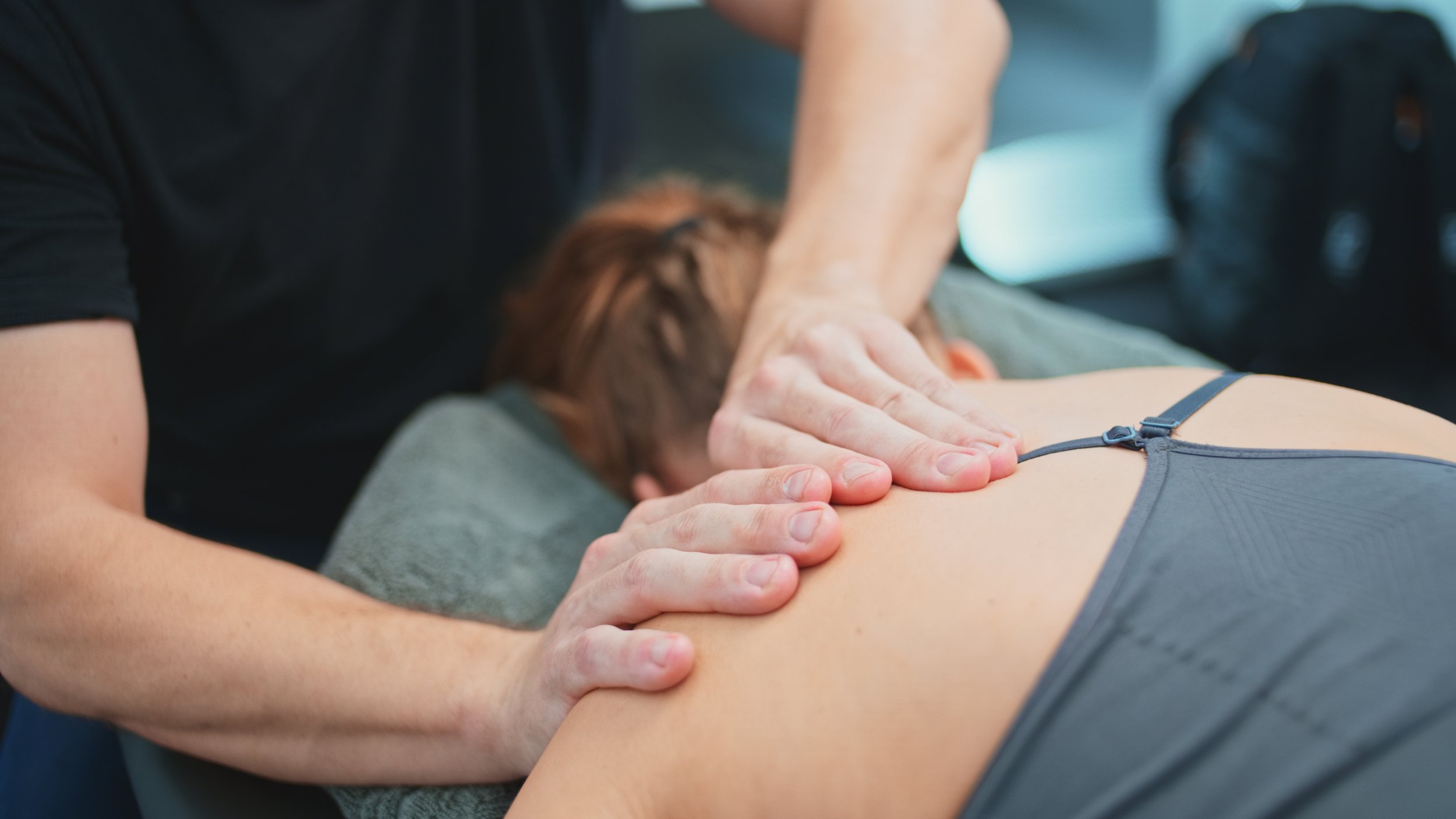
Does this sound familiar?
People visiting our Soho clinic with tendinopathy often tell us:
It feels stiff first thing in the morning.
It eases once I get moving.
Exercise actually makes it feel better.
Then it aches later that day.
It hurts more the next morning.
I've rested it before, but it always comes back.
Stretching feels good for a while, but the pain returns.
I don't remember one specific injury.
Those patterns are classic tendon behaviour.
Understanding them helps us decide where your tendon currently sits on its recovery journey.
This is a conversation we have almost every week at our Central London clinic.
Patient:
"I don't understand it.
I can still train.
In fact, it feels better once I've warmed up.
It's only later that it really starts hurting."
That's actually one of the biggest clues that we're dealing with a tendon.
Unlike many muscle injuries, tendons often become more comfortable during activity.
The important question isn't:
"How did it feel while you were exercising?"
It's:
"How did it feel later that day?"
And…
"What was it like the following morning?"
Those answers tell us far more about whether the tendon is coping with the amount of load you've given it.
Tendons are living tissue.
This is one of the most important things we explain.
A tendon isn't a piece of rope.
It isn't permanently worn out.
It's living tissue that's constantly adapting to the demands you place upon it.
When it's exposed to the right amount of load, the collagen fibres remodel, becoming better organised and more capable of producing and transferring force.
When it's exposed to too much load — or too little for too long — that adaptation becomes less efficient.
The tendon begins to complain.
The good news is that tendons can adapt remarkably well.
Our job is to provide the right stimulus at the right stage of recovery.
Tendons we commonly treat.
At Elevate Clinic in Soho, we treat tendinopathy affecting a wide range of structures, including:
Achilles tendinopathy — insertional and mid-portion Achilles tendon pain, common in runners and those returning to sport after a period of reduced activity.
Patellar tendinopathy (jumper's knee) — pain below the kneecap affecting running, jumping and change-of-direction sports.
Gluteal tendinopathy — lateral hip pain often confused with hip bursitis or referred pain from the lumbar spine, particularly common in women during midlife.
Hamstring tendinopathy — proximal hamstring pain at the sitting bone, frequently seen in runners and those who sit for prolonged periods.
Rotator cuff tendinopathy — shoulder tendon pain affecting overhead movements, lifting and sleeping on the affected side.
Lateral epicondylalgia (tennis elbow) — pain on the outside of the elbow affecting gripping, lifting and everyday tasks.
Medial epicondylalgia (golfer's elbow) — pain on the inside of the elbow, common in throwing athletes and those performing repetitive gripping activities.
Tibialis posterior tendinopathy — inner ankle pain affecting walking, running and single-leg loading.
Plantar fasciopathy — heel and arch pain most noticeable with the first steps in the morning.
If we're not measuring it, we're guessing.
Every tendon behaves slightly differently.
But the principles remain the same.
During your assessment we'll look at things like:
Morning stiffness
Pain location
How symptoms change after activity
Strength
Endurance
Balance and movement control
Functional tasks that reproduce your symptoms
Sport-specific demands
One of the most valuable measurements isn't taken in the clinic.
It's what happens after you leave.
How does the tendon feel three to eight hours later?
How does it feel tomorrow morning?
Those responses become part of your rehabilitation programme.
Because they tell us whether we've given your tendon enough load to stimulate adaptation — or too much for it to recover from.
If we're not measuring those responses…
We're guessing.
Tendons need the right amount of load.
One of the biggest myths surrounding tendinopathy is that complete rest is the answer.
Unfortunately, tendons don't become stronger by avoiding load forever.
They become stronger by being exposed to the right amount of load at the right time.
Early on, that may involve isometric exercises to reduce pain.
As your tendon settles, we'll progressively introduce heavier strengthening exercises that encourage the tissue to remodel and become more resilient.
Eventually, rehabilitation becomes much more specific.
Running.
Jumping.
Throwing.
Lifting.
Changing direction.
Whatever you want to return to, your rehabilitation should prepare you for those exact demands.
We're not trying to avoid loading your tendon.
We're teaching it how to tolerate load again.
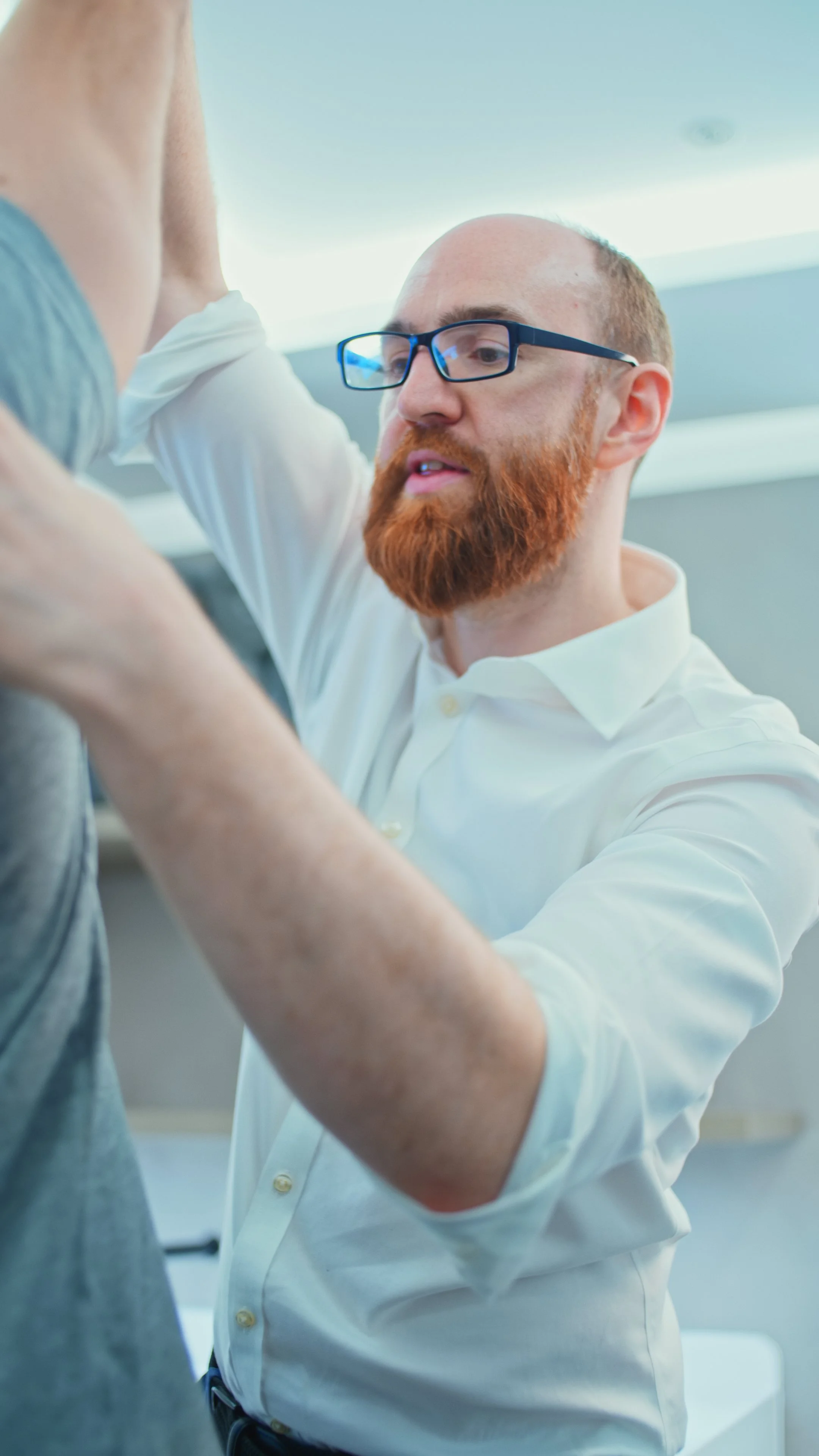
Recovery isn't judged by today's pain.
One of the hardest parts of tendon rehabilitation is learning not to judge progress by a single day.
Instead, we look for trends.
Is your morning stiffness becoming shorter?
Are flare-ups less frequent?
Can you tolerate more activity?
Are symptoms settling more quickly after exercise?
Those are often the first signs that your tendon is adapting.
Recovery is rarely a straight line.
But it should make sense.
If it doesn't…
We'll change the plan.
What if your tendon isn't improving?
Most tendons follow a fairly predictable recovery pattern.
If yours isn't…
We'll stop and ask why.
Have we diagnosed the right problem?
Are we loading it appropriately?
Is compression playing a role?
Has another structure become involved?
Would imaging change our management?
Occasionally, longer-standing tendons may benefit from shockwave therapy — available at our Soho clinic.
Not because it's a miracle treatment.
But because some chronic tendons stop responding to loading alone.
If we think it's appropriate, we'll explain why, discuss the evidence and make a decision together.
We'll work through this together.
One of the biggest frustrations with tendon pain is that it often improves…
Then flares up again.
That doesn't necessarily mean you've gone backwards.
Often, it's your tendon giving us information.
We'll teach you how to read those signals, adjust your training and understand what your body is telling you.
The goal isn't simply to reduce pain.
It's to build a tendon that's capable of coping with whatever life, work or sport asks of it.
FAQs
Should I stop exercising? Not necessarily. Most people benefit from modifying their activity rather than stopping completely. We'll help you find the right amount of load for your stage of recovery.
Why does my tendon hurt more the next morning? Morning stiffness is one of the hallmark signs of tendinopathy. It's also one of the best ways for us to judge whether your rehabilitation programme is progressing appropriately.
Will stretching fix my tendon? Not usually on its own. Stretching has a role in some situations, but progressive loading is usually the key to long-term recovery.
How long does tendinopathy take to recover? That depends on how long the tendon has been irritated and how well it's responding to rehabilitation. Some people improve within weeks, while others require several months of progressive loading. We'll explain what we expect after your assessment.
Ready to understand tendon pain?
Whether your tendon pain is affecting your shoulder, elbow, knee, Achilles, hip or foot, our role is the same.
We'll identify why the tendon has become overloaded, measure how it's responding, guide your rehabilitation and build the strength and resilience needed to get you back to doing what you love.
Our clinic is based at UNTIL, 111 Charing Cross Road, Soho — a short walk from Tottenham Court Road Station.
Let's figure out what's actually going on.
Then let's get you back to doing what you love.
Whether you’re an athlete, a busy professional, or someone looking to relieve tension and improve mobility, our clinic offers a unique combination of expertise, care, and the facilities to support your goals. Book a session today and experience the difference for yourself!