
Shoulder Impingement Treatment in Soho, Central London
Shoulder Impingement Treatment at Elevate Clinic, Central London: Shoulder impingement isn't always the problem.
It might sound like a strange thing to hear from a clinic that treats shoulder pain…
But here's something we explain almost every day.
Everyone's shoulder impinges.
Every time you lift your arm overhead, the structures inside your shoulder naturally come closer together.
That's normal.
The important question isn't:
"Does your shoulder impinge?"
It's:
"Why isn't your shoulder tolerating it?"
For some people, the shoulder has simply become overloaded.
For others, the muscles that normally control the joint aren't doing their job as well as they could.
Understanding that difference changes everything.
That's where we begin.
Let's figure out what's actually going on.
Then we'll build a plan that gets you back to doing what you love.
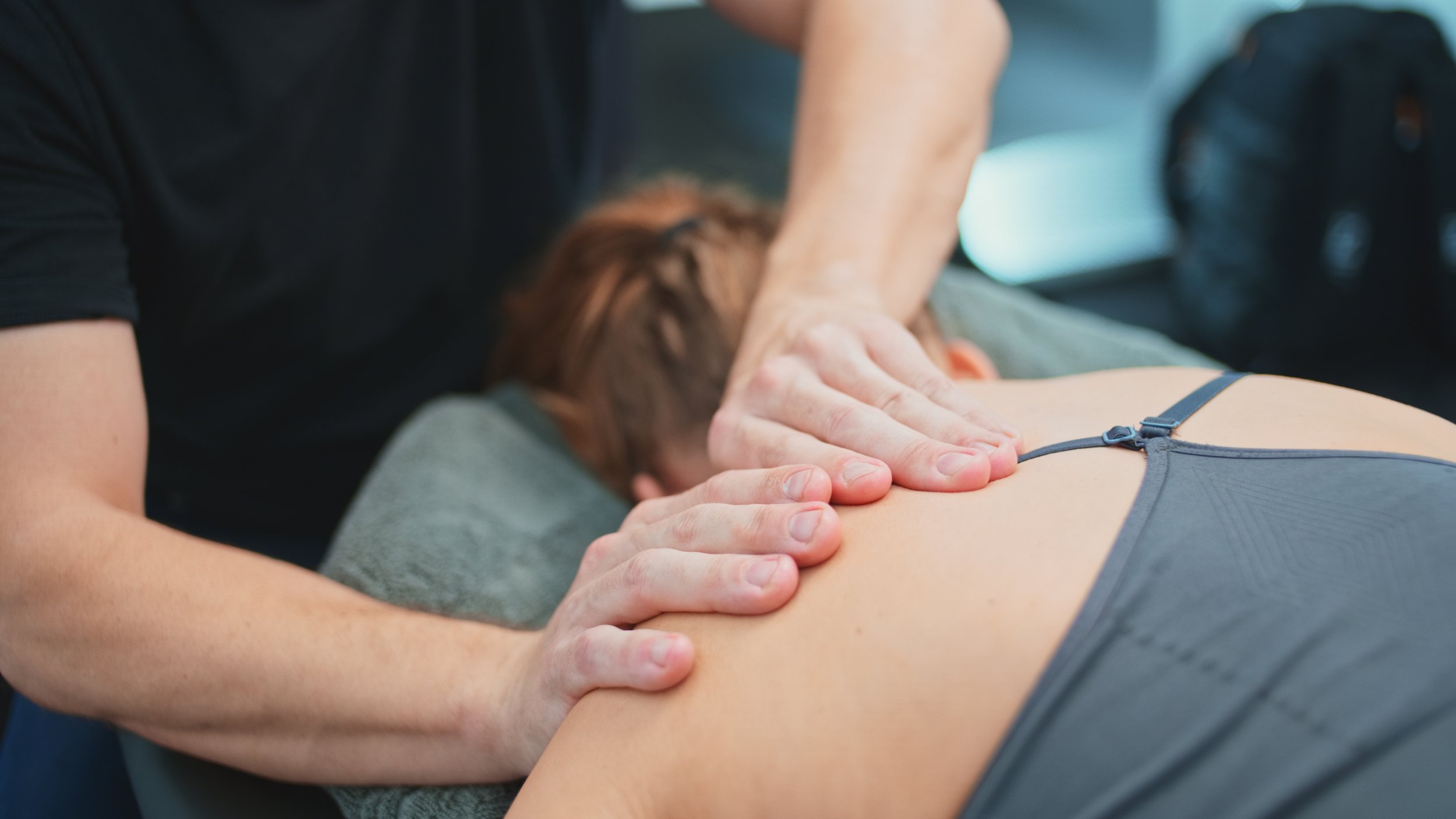
Does this sound familiar?
People visiting our Soho clinic with shoulder impingement often tell us:
It hurts reaching into a cupboard.
I can't comfortably lift weights overhead anymore.
Sleeping on that shoulder is painful.
My shoulder catches during certain movements.
Pressing exercises hurt.
Swimming has become uncomfortable.
The pain is on the outside of my shoulder.
It eases with rest, but comes back as soon as I train again.
These symptoms often develop gradually rather than after one dramatic injury.
That's an important clue.
This is a conversation we have almost every week at our Central London clinic.
Patient:
"I've been told my shoulder is impinging.
Does that mean something's trapped?"
Not necessarily.
One of the first things we explain is that impingement is a normal movement that happens in every healthy shoulder.
The difference is that a healthy shoulder tolerates it.
An irritated shoulder doesn't.
So instead of asking:
"How do we stop your shoulder impinging?"
We ask:
"Why has your shoulder lost the capacity to cope with movements it used to manage perfectly well?"
Sometimes it's because training volume has increased.
Sometimes strength has reduced.
Sometimes shoulder control has changed.
Sometimes another structure, such as the rotator cuff, is contributing.
That's the conversation we want to have.
Shoulder pain isn't always coming from one structure.
Shoulder impingement isn't a single diagnosis.
The pain may involve:
The rotator cuff tendons — supraspinatus, infraspinatus and subscapularis tendinopathy are among the most common contributors to shoulder impingement pain.
The subacromial bursa — subacromial bursitis often develops alongside rotator cuff irritation, producing pain with overhead movements and lying on the affected side.
The long head of the biceps — biceps tendinopathy can mimic or accompany rotator cuff pain, particularly with lifting and overhead activities.
The shoulder capsule — capsular tightness can alter shoulder mechanics and contribute to impingement-like symptoms.
Shoulder blade control — scapular dyskinesia affects how the shoulder blade moves during arm elevation, reducing the space available for the structures beneath the acromion.
The neck — cervical radiculopathy and upper cervical dysfunction can refer pain into the shoulder and mimic local shoulder impingement.
Several structures can become sensitive at the same time.
Our assessment is designed to understand which tissues are involved and, more importantly, why they've become overloaded.
Treatment is about rebuilding shoulder capacity.
In the early stages, our priority is reducing irritation.
That may include manual therapy, soft tissue treatment, taping, dry needling and modifying activities that are repeatedly provoking your symptoms.
But treatment is only the beginning.
The real rehabilitation starts when we begin rebuilding your shoulder's capacity.
We'll progressively strengthen the rotator cuff, improve shoulder blade control, develop overhead stability and gradually expose your shoulder to the positions that matter most in your everyday life, work or sport.
If you're returning to the gym, we'll prepare your shoulder for pressing, pulling and overhead lifting.
If you're returning to tennis, swimming, CrossFit or Hyrox, your rehabilitation should prepare you for those specific demands — not simply get rid of today's pain.
Our goal isn't to stop your shoulder from impinging.
Our goal is to make it strong enough that impingement is no longer a problem.
If we're not measuring it, we're guessing.
One of the biggest mistakes in shoulder rehabilitation is progressing simply because the pain has settled.
Pain is only one part of the picture.
We also want to know whether your shoulder has rebuilt the capacity to tolerate overhead loading.
During your assessment and rehabilitation we'll measure things such as:
Shoulder range of movement
Rotator cuff strength
Endurance
Shoulder blade control
Functional movement
Pain during specific tasks
Confidence using the shoulder overhead
Where appropriate, we'll use hand-held dynamometry to objectively measure shoulder strength rather than relying on how strong it feels.
We'll often compare those results against your body weight and established rehabilitation benchmarks to help decide when you're ready to progress back into heavier gym training, overhead work or sport.
For more athletic patients, we may also use force plate testing and shoulder-specific return-to-sport assessments, including tests such as the ASH test, to assess not just strength, but how quickly you can produce force in the positions your sport demands.
Those measurements help us answer one simple question:
Is your shoulder genuinely ready for the next stage?
Because if we're not measuring your progress…
We're guessing.
Treatment is about rebuilding shoulder capacity.
In the early stages, our priority is reducing irritation.
That may include manual therapy, soft tissue treatment, taping, dry needling and modifying activities that are repeatedly provoking your symptoms.
But treatment is only the beginning.
The real rehabilitation starts when we begin rebuilding your shoulder's capacity.
We'll progressively strengthen the rotator cuff, improve shoulder blade control, develop overhead stability and gradually expose your shoulder to the positions that matter most in your everyday life, work or sport.
If you're returning to the gym, we'll prepare your shoulder for pressing, pulling and overhead lifting.
If you're returning to tennis, swimming, CrossFit or Hyrox, your rehabilitation should prepare you for those specific demands — not simply get rid of today's pain.
Our goal isn't to stop your shoulder from impinging.
Our goal is to make it strong enough that impingement is no longer a problem.

Elevate founder Jon Cairns
Recovery should follow a pattern.
One of the biggest milestones isn't when your shoulder becomes pain-free.
It's when you stop thinking about it.
Can you sleep comfortably?
Reach overhead without hesitation?
Train confidently again?
Has your strength returned?
Can you tolerate repeated overhead movements without your symptoms lingering afterwards?
Those are the signs we're looking for.
Recovery isn't simply about reducing pain.
It's about restoring confidence and capacity.
What if your shoulder isn't improving?
Every diagnosis comes with an expected recovery pattern.
If your shoulder isn't responding as we'd expect, we'll reassess.
Have we diagnosed the right structure?
Is another tissue contributing?
Has your rehabilitation progressed too quickly — or not quickly enough?
Would imaging change what we do?
Good rehabilitation isn't about stubbornly continuing the same exercises.
It's about adapting as your shoulder gives us more information.
We'll work through this together.
Shoulder pain can be frustrating, particularly if you've been told to simply stop exercising.
We'd rather help you understand what your shoulder is capable of today — and then gradually build from there.
We'll explain what we're measuring, why we're progressing your exercises and what needs to happen before returning to heavier lifting or sport.
Recovery isn't something that's done to you.
It's something we build together.
We'll bring the clinical knowledge.
You'll bring the feedback.
Together we'll build a shoulder that's ready for whatever you want to ask of it.
FAQs
Does shoulder impingement mean something is trapped? Not necessarily. Some degree of impingement is a normal part of shoulder movement. The important question is why the tissues have become sensitive to that load.
Should I stop going to the gym? Usually not. Most people benefit from modifying their training rather than stopping completely. We'll help you continue exercising while rebuilding your shoulder's capacity.
Will I need a scan? Not always. Many shoulder problems can be diagnosed clinically. If imaging would change your management, we'll explain why and arrange the appropriate referral.
How do you know when I'm ready to return to lifting? We don't rely on time alone. We'll combine your symptoms with objective measurements such as strength testing, hand-held dynamometry, functional assessments and, where appropriate, return-to-sport testing to help us make that decision with confidence.
Ready to understand shoulder pain?
Whether your shoulder hurts in the gym, at work or during everyday activities, our role is to understand why it's become overloaded, measure your progress and rebuild the strength, stability and confidence needed to return to doing what you love.
Our clinic is based at UNTIL, 111 Charing Cross Road, Soho — a short walk from Tottenham Court Road Station.
Let's figure out what's actually going on.
Then let's get you back to doing what you love.
Whether you’re an athlete, a busy professional, or someone looking to relieve tension and improve mobility, our clinic offers a unique combination of expertise, care, and the facilities to support your goals. Book a session today and experience the difference for yourself!