
Rotator Cuff Injury Treatment in Soho, Central London
Rotator Cuff Injury Treatment at Elevate Clinic, Central London:
Your rotator cuff isn’t designed to make your shoulder powerful.
It’s designed to make it stable.
One of the biggest misconceptions we hear is:
“I’ve torn my rotator cuff, so I need to make it stronger.”
Strength is certainly part of the answer.
But before strength comes something even more important.
Control.
Your rotator cuff is a group of muscles—specifically the supraspinatus, infraspinatus, teres minor, and subscapularis—whose primary job is to keep the ball (humeral head) of your shoulder perfectly centred in the socket (glenoid fossa) while your larger muscles generate force.
When that neuromuscular system becomes overloaded, irritated or weak, the shoulder often begins to complain.
That’s where we start.
Let’s figure out what’s actually going on.
Then we’ll build a plan that gets you back to eating, talking, laughing and living comfortably again.
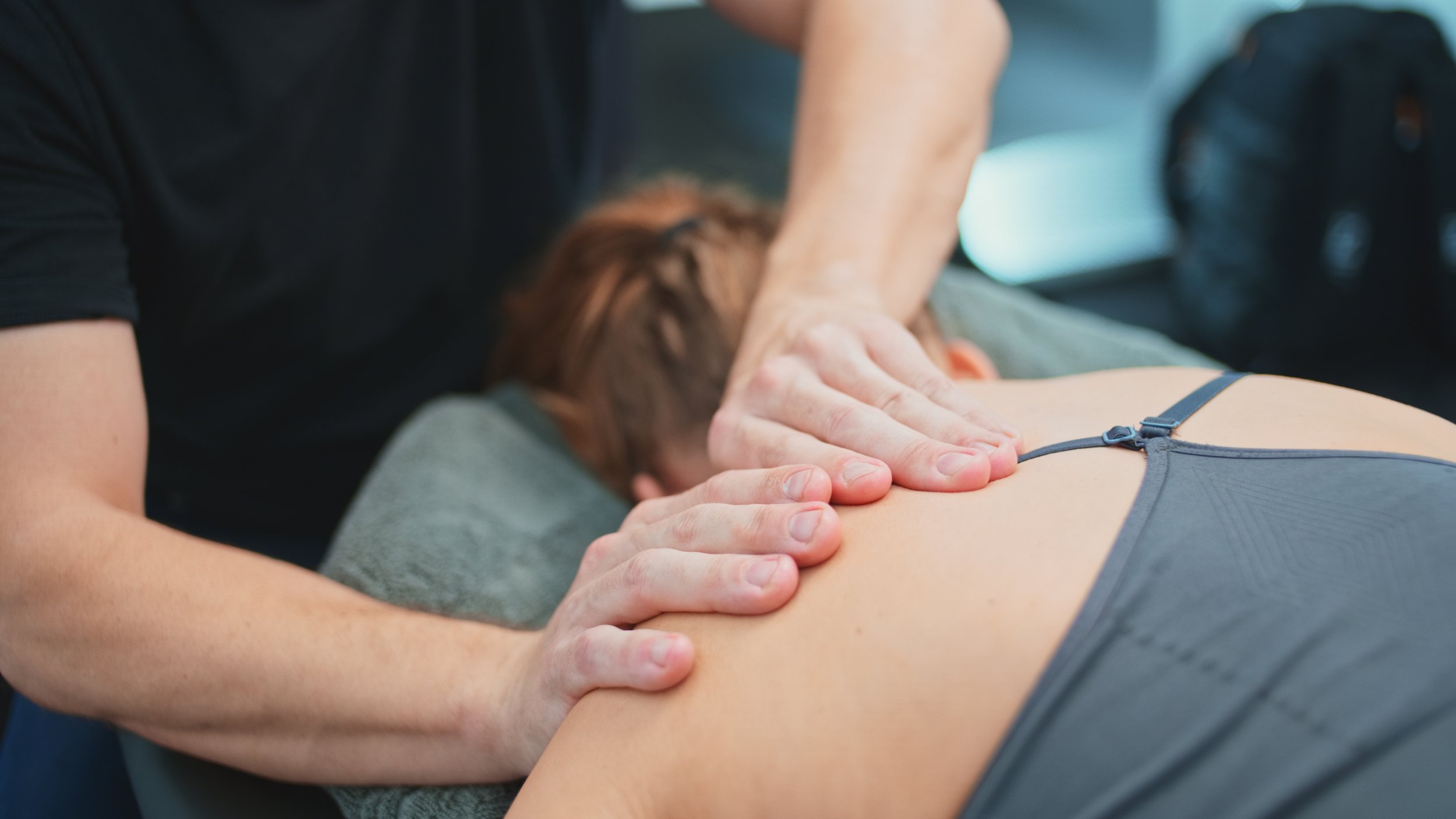
People with rotator cuff injuries visit us at our Soho clinic and often tell us:
It hurts reaching overhead.
I can’t comfortably sleep on that shoulder.
Lifting things out of a cupboard hurts.
The pain is around the outside of my shoulder (often referred down the lateral arm).
It aches after the gym.
Throwing has become painful.
My shoulder feels weak.
It isn’t one big injury—it just keeps getting worse.
For many people, the pain builds gradually rather than beginning with one dramatic incident.
This is a conversation we have almost every week…
Patient:
“I don’t remember hurting it.
I just noticed it aching after the gym.
Now even putting on a T-shirt is uncomfortable.”
So we rewind the clock.
Have you recently started training more?
Changed your programme?
Started CrossFit?
Taken up Hyrox?
Started swimming again?
Playing more tennis or padel?
Working longer hours and recovering less?
Very often, something has changed.
Not because you’ve injured your shoulder…
But because you’ve quietly asked more of it than it currently has the capacity to tolerate.
Does this sound familiar?
Rotator cuff injuries are not all the same.
The term “rotator cuff injury” covers a huge range of clinical conditions.
Some people have a simple muscle strain.
Others have tendon irritation or subacromial bursitis.
Some have a long-standing rotator cuff tendinopathy.
Others have partial-thickness or full-thickness tears.
Sometimes the shoulder pain isn’t coming from the cuff at all.
It may actually be coming from the neck (cervical radiculopathy) or another structure like the long head of the biceps tendon or the acromioclavicular (AC) joint.
Each behaves differently.
Which is why getting the correct diagnosis right is the first priority.
If we’re not measuring it, we’re guessing.
Shoulders are one of the easiest joints to fool yourself with.
Pain often settles before strength and muscle activation have returned.
That’s why we like to measure both.
During your assessment at our Central London clinic, we’ll analyze key markers:
Shoulder range of movement (glenohumeral kinematics).
Rotator cuff strength in external and internal rotation.
Endurance of the scapular stabilizers.
Pain during functional movements.
Shoulder joint stability and laxity.
Force production in different positions of abduction and rotation.
Sport-specific biomechanical control.
Where appropriate, we’ll use handheld dynamometry, force plate testing and shoulder-specific objective assessments to understand whether your shoulder is genuinely becoming more capable.
Those measurements become the roadmap for your rehabilitation.
Because they tell us when it’s safe to progress.
Not just when the pain feels a little better.
Treatment isn’t about resting forever.
In the early stages, our priority is to calm the irritated shoulder down.
Depending on your symptoms, this may include chiropractic care, manual therapy, joint mobilization, soft tissue treatment, medical acupuncture (dry needling), taping, or modifying specific activities that are repeatedly compressing the tendon.
But passive treatment is only the beginning.
The real rehabilitation starts when we begin rebuilding tissue capacity.
Initially, that might involve gentle isometric exercises to settle pain and recruit the cuff muscles without aggravating the joint.
As your symptoms improve, we’ll progressively load the rotator cuff, improve scapulohumeral rhythm, and gradually expose the joint to the specific loads and positions your sport or everyday life demands.
Later still, rehabilitation becomes much more dynamic.
Throwing.
Catching.
Fast reactions.
Plyometric exercises.
Sport-specific drills.
The goal isn’t simply to reduce pain.
It’s to prepare your shoulder for the demands you’re going to place on it.
Recovery follows stages.
One of the biggest mistakes people make is returning to full activity simply because the shoulder feels better.
Pain isn’t always a reliable guide.
Your shoulder also needs to demonstrate that it can tolerate mechanical load.
That might mean restoring peak strength.
Improving muscular endurance.
Building confidence overhead.
Or preparing for repeated high-speed movements if you’re returning to throwing, swimming, or contact sports.
We’ll explain where you are in that journey and what clinical milestones we’re looking for before moving to the next stage of your recovery.
What if things aren’t improving?
Every diagnosis comes with an expected recovery pattern.
If your shoulder isn’t behaving as we’d expect…
We’ll stop.
We’ll reassess.
Does this still behave like a rotator cuff problem?
Could another structure, like the glenoid labrum, be involved?
Is the neck referring pain to the shoulder?
Would diagnostic imaging change what we do next?
Good rehabilitation isn’t about blindly continuing the same exercises.
It’s about adapting as your body gives us more information.
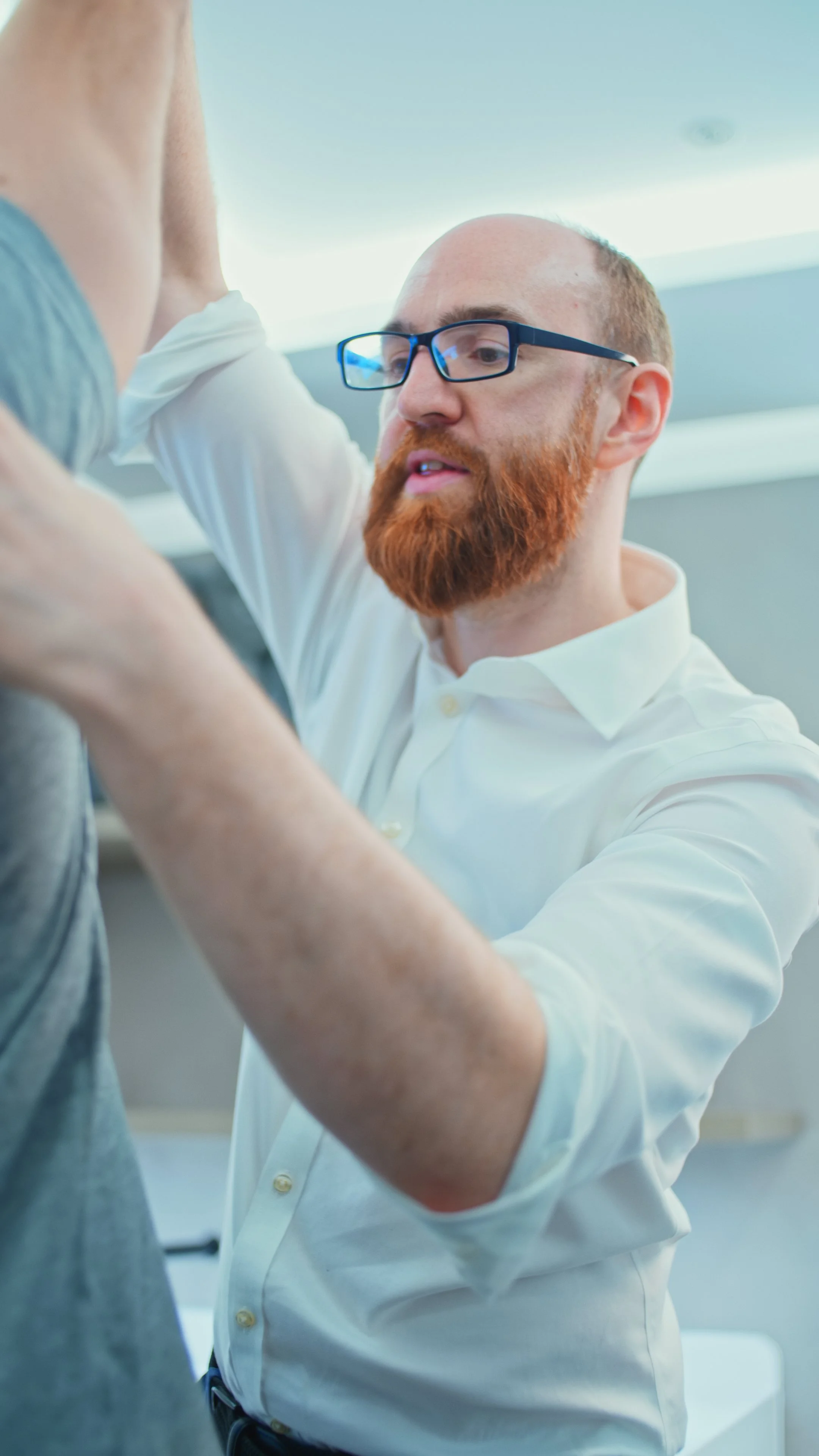
Elevate founder Jon Cairns
We’ll work through this together.
One thing we encourage all our patients to do is ask questions.
Why this exercise?
Why this treatment?
Why are we strengthening this muscle instead of another one?
Understanding your rehabilitation helps you take ownership of it.
We’ll explain what we’re trying to achieve at each stage and make sure the plan makes sense to you.
Because the best outcomes happen when clinician and patient work as one team.
We’ll bring the clinical knowledge.
You’ll bring the feedback.
Together we’ll build a shoulder that’s not only pain-free, but capable of coping with whatever you ask of it.
FAQs
Do I need a scan?
Not always. Most rotator cuff issues, including tendinopathy and significant tears, can be accurately identified through a detailed clinical and physical assessment. If progressive weakness or a lack of recovery suggests that further imaging, such as an ultrasound or MRI shoulder scan, would change your management, we’ll explain why and arrange the appropriate referral.
Should I stop going to the gym?
Usually not. Most people benefit from modifying their training, adjusting their lifting volume, or altering their range of motion rather than stopping altogether. We’ll show you what exercises you can continue doing safely while your rotator cuff recovers.
How long does a rotator cuff injury take to recover?
That depends entirely on the specific diagnosis. A minor acute strain or reactive tendinopathy may settle within a few weeks, while chronic, degenerative tendon tears or severe shoulder impingement can require several months of consistent rehabilitation. We’ll explain the likely timeline after your assessment.
Will it come back?
Our aim isn’t just to settle the immediate pain. It’s to build enough strength, structural stability and tissue capacity that your shoulder is resilient and far less likely to become overloaded again when you return to your normal training routine.
Ready to understand your shoulder pain?
Whether you’ve recently developed shoulder pain or you’ve been struggling with it for months, our goal is simple.
We’ll work out what’s driving your symptoms, measure your progress, adapt your rehabilitation as you improve and help you return to training with confidence.
Our clinic is based at UNTIL, 111 Charing Cross Road, Soho — a short walk from Tottenham Court Road Station.
Let’s figure out what’s actually going on.
Then let’s get you back to doing what you love.
Whether you’re an athlete, a busy professional, or someone looking to relieve tension and improve mobility, our clinic offers a unique combination of expertise, care, and the facilities to support your goals. Book a session today and experience the difference for yourself!